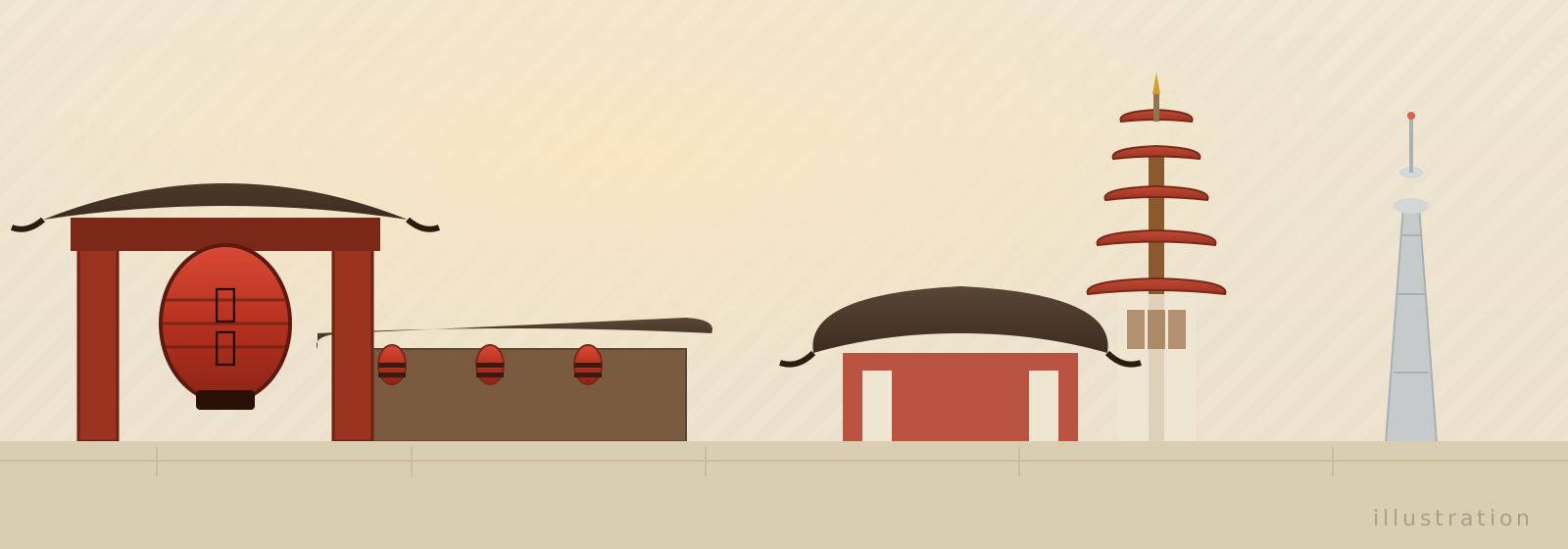
TOKYO · ASAKUSA ROUTE
Asakusa Route
The temple-gate town of Sensoji, Tokyo's oldest temple, from Kaminarimon heading north. Kamejyu's dorayaki, Daikokuya's tendon, Hoppy Street's stewed offal, and a Denki Bran at Kamiya Bar to finish — the downtown plates of Edo, shop by shop.
What Asakusa is
Asakusa is a temple-gate town, running since the Edo period, that grew around Sensoji — the oldest temple in Tokyo. Its front gate, Kaminarimon (properly the Wind-and-Thunder Gate), hangs a huge red lantern, and from there a covered approach called Nakamise runs straight to the temple. Nakamise is one of Japan's oldest shopping streets, selling souvenirs and food to pilgrims since Edo times. Asakusa was both a temple gate and a common people's pleasure quarter of theatres and sideshows; burned again by the Great Kanto Earthquake and the war, it kept winning back its downtown bustle. So the Asakusa food walk holds, on the same street, the buzz of a sightseeing spot and the plainness of shops the locals use every day.
Edo flavours, and Tokyo's oldest bar
Asakusa's eating rests on wagashi (Japanese sweets), fried food, and downtown drinking. Old sweet houses like Kamejyu's dorayaki and Funawa's imo-yokan line Nakamise, and a few steps on waits Daikokuya's prawn tempura bowl — an Edo-style tendon fried dark in sesame oil, its batter soaked with a sweet-savoury glaze. And don't forget the drink. Hoppy Street (the "nikomi street") is lined with izakaya open from midday, where each shop's beef nikomi (stewed offal) tastes a little different. Finish at Kamiya Bar: founded in 1880, said to be Japan's first bar, whose signature "Denki Bran" is a thirty-percent sweet spirit born when "electric" still meant new. From Edo sweetness to Meiji modernity, Asakusa keeps the layers of its eras in a single plate.
How to walk this route
Start at Kaminarimon. Pass under the great lantern into Nakamise and head north toward the temple. Open with something sweet — Kamejyu's dorayaki, Funawa's imo-yokan. Nakamise is a temple approach, so don't eat as you walk; eat at the shopfront or on a bench. Turn onto Denboin Street and the fried food and full meals multiply — Asakusa menchi-katsu, Daikokuya's tendon. Slot in a jumbo melon pan or the world's-strongest matcha gelato on Nishi-Sando, and finish on Hoppy Street. Have a drink over beef nikomi, then close at Kamiya Bar with a Denki Bran — that is the classic run from south to north. Reckon about three and a half hours on foot, alternating standing and sitting, sweet and savoury.
What to look for
For sweets, first Kamejyu's dorayaki — the pancake thick and pillowy, its uneven browning the proof each is grilled by hand. Kagetsudo's jumbo melon pan is as big as a face, crisp outside and startlingly light within. Suzukien's matcha gelato lets you choose a strength from 1 to 7, and No.7 claims to be "the world's strongest." For a meal, Daikokuya's prawn tendon — the dark batter soaked in sweet-savoury glaze, yet cuttable with chopsticks. And as tavern plates, Hoppy Street's beef nikomi and Kamiya Bar's Denki Bran. From sweets to a rich tendon to a closing drink, an Asakusa plate runs in one line of "what the downtown of Edo has eaten all along."
Before you go
Nakamise and the Kaminarimon area are crowded year-round with holidaymakers and overseas visitors. For an unhurried meal, first thing in the morning (Sensoji opens early) or a weekday morning is more comfortable. Nakamise sometimes posts a "don't eat while walking" notice, so eat what you buy at the shopfront or on a bench. Popular sweets can sell out by early afternoon, so buy in the morning. Hoppy Street opens at midday and fills by evening. Old houses have closing days and changing hours, so treat the times here as a guide and confirm before you set out.
Route map
Kaminarimon → Nakamise → Denboin St → Nishi-Sando → Hoppy St · numbers match the dishes below
The dishes on this route (8)
Tap through to each shop and dish
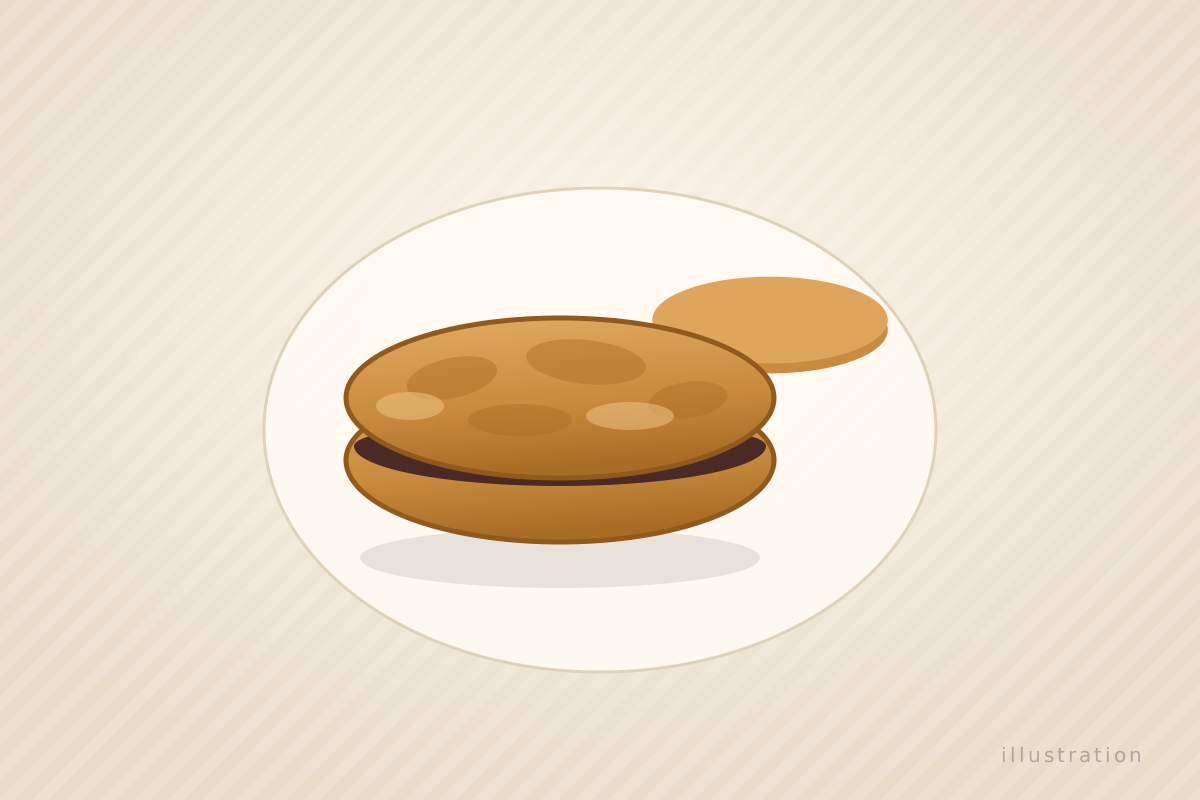 1SweetsKamejyu×DorayakiThe pancake is thick and pillowy. The uneven browning is proof each one is grilled by hand — that patchiness is the mark of the real thing. Two fillings, black bean and white (butter bean). Often sold out by early afternoon.Nearest 2-18-11 Kaminarimon (Asakusa Stn)Price ¥430 each
甘
1SweetsKamejyu×DorayakiThe pancake is thick and pillowy. The uneven browning is proof each one is grilled by hand — that patchiness is the mark of the real thing. Two fillings, black bean and white (butter bean). Often sold out by early afternoon.Nearest 2-18-11 Kaminarimon (Asakusa Stn)Price ¥430 each
甘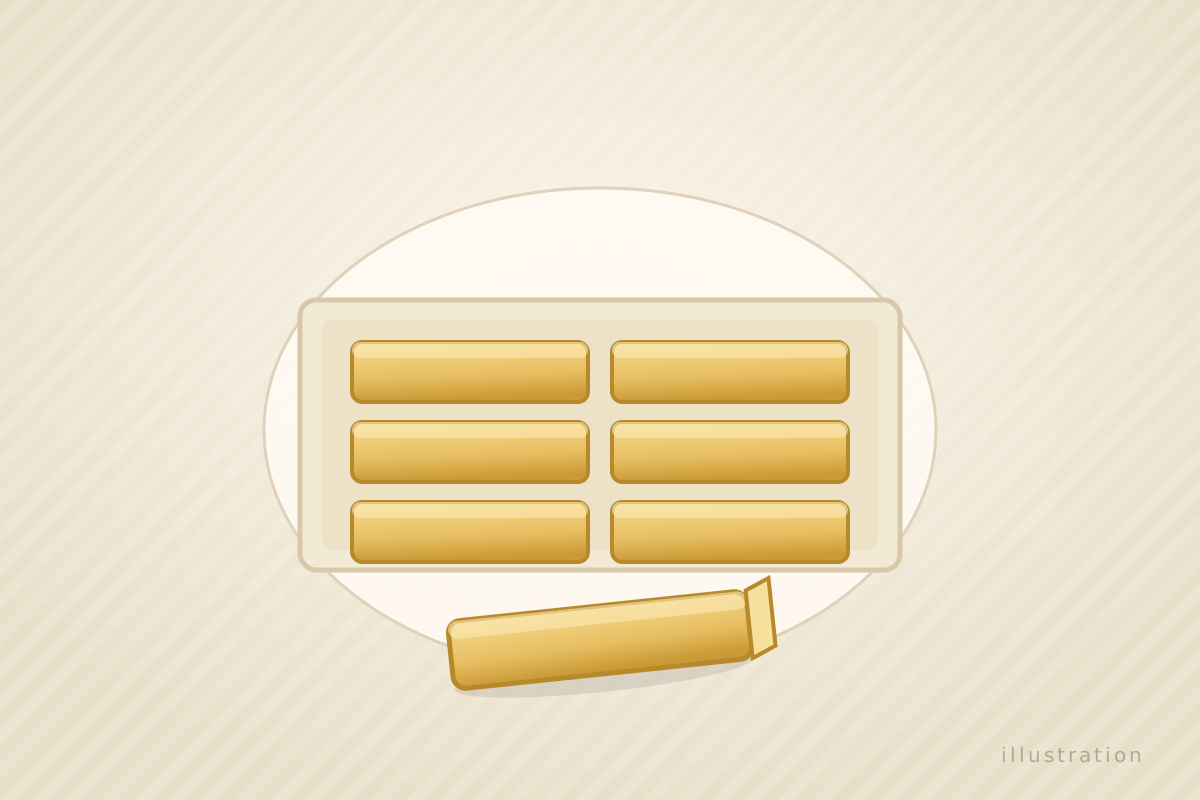 2SweetsFunawa (main shop)×Imo-yokan (sweet potato bar)Sweet potato, sugar and a pinch of salt — nothing else. Every bar is peeled by hand, so only the potato itself is left on the palate. Firm when chilled, soft at room temperature. It does not keep: eat it that day or the next.Nearest 1-22 Asakusa (Shin-Nakamise)Price ¥173 each
肉
2SweetsFunawa (main shop)×Imo-yokan (sweet potato bar)Sweet potato, sugar and a pinch of salt — nothing else. Every bar is peeled by hand, so only the potato itself is left on the palate. Firm when chilled, soft at room temperature. It does not keep: eat it that day or the next.Nearest 1-22 Asakusa (Shin-Nakamise)Price ¥173 each
肉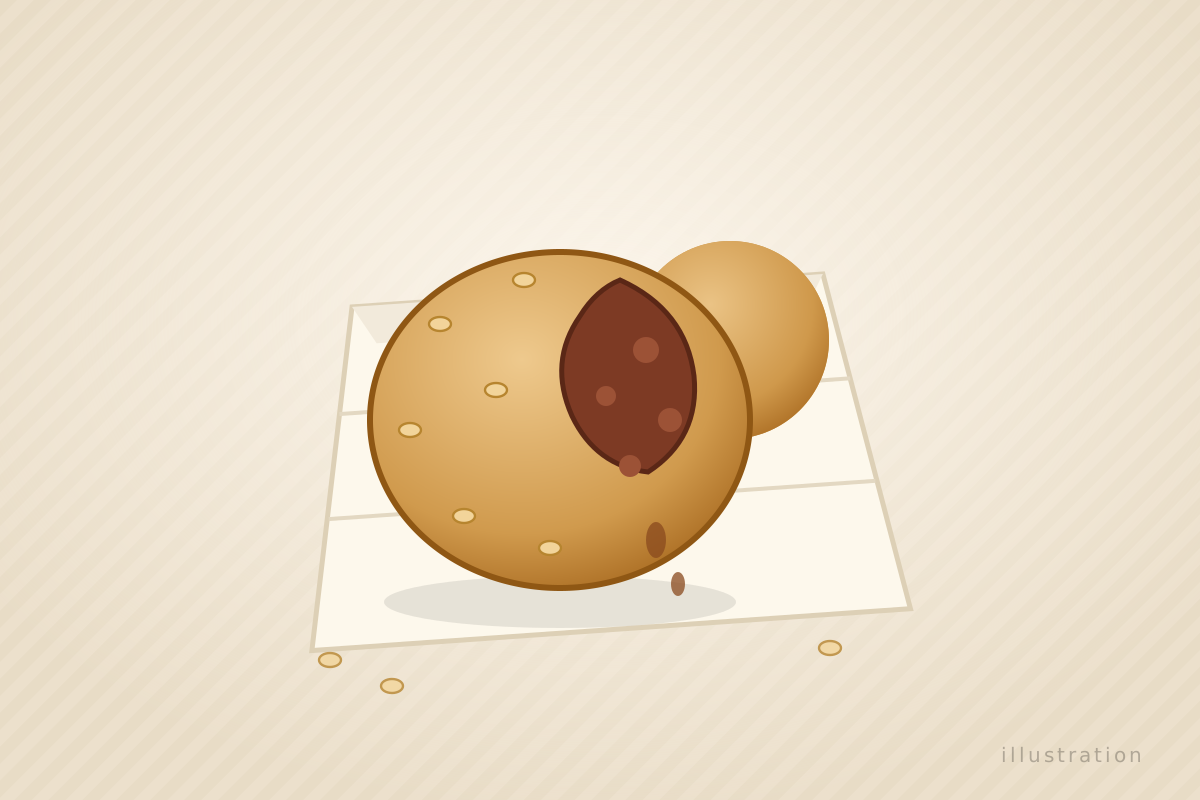 3MeatAsakusa Menchi×Menchi KatsuEaten standing, straight from the fryer. Bite it and the juice shoots out, so hold the paper underneath before your mouth goes near it. Coarse-ground Kouza pork from Kanagawa blended with wagyu, and the onion sweetness runs strong. The queue almost never breaks.Nearest 2-3-3 Asakusa (Denboin St)Price ¥250 each
飯
3MeatAsakusa Menchi×Menchi KatsuEaten standing, straight from the fryer. Bite it and the juice shoots out, so hold the paper underneath before your mouth goes near it. Coarse-ground Kouza pork from Kanagawa blended with wagyu, and the onion sweetness runs strong. The queue almost never breaks.Nearest 2-3-3 Asakusa (Denboin St)Price ¥250 each
飯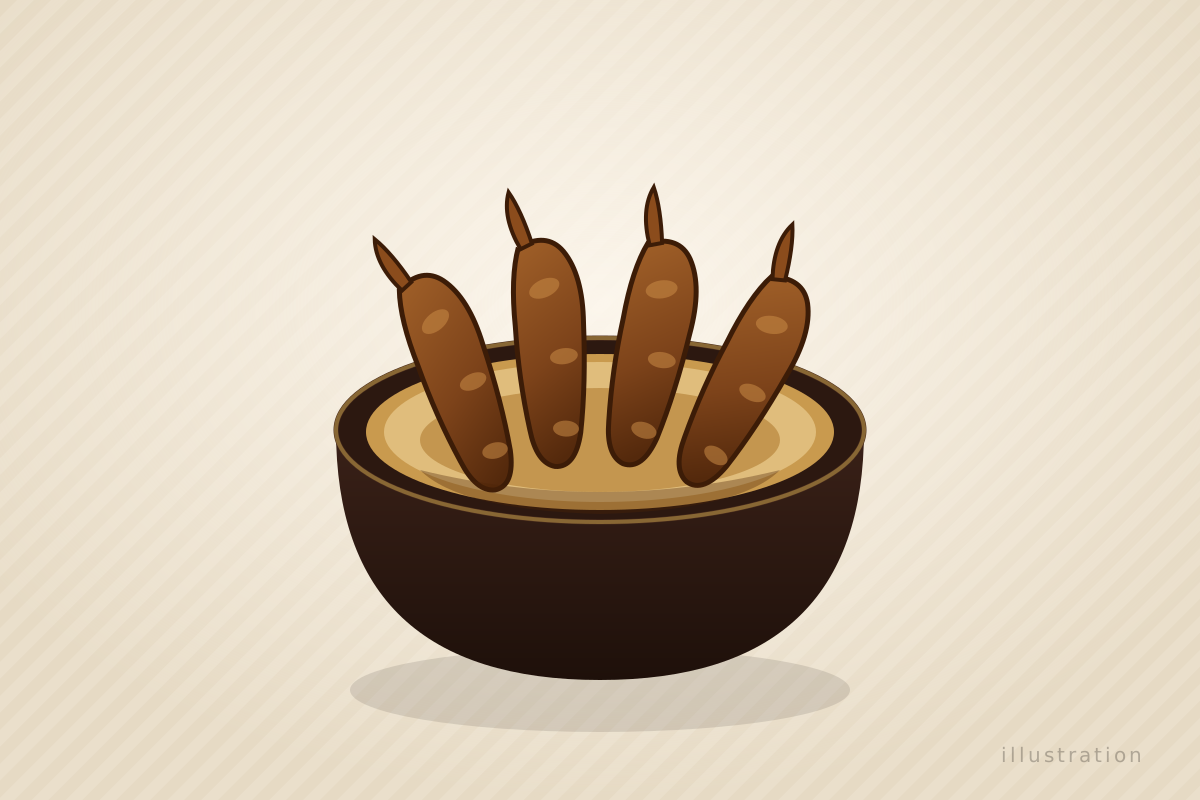 4RiceDaikokuya Tempura×Prawn TendonFour prawns fried dark in sesame oil. The batter is made to drink up a secret sweet-salty sauce, so despite being deep-fried it parts under chopsticks. Come expecting crispness and you will be disappointed — this is a tendon you eat for the sauce.Nearest 1-38-10 Asakusa (Denboin St)Price around ¥2,000
甘
4RiceDaikokuya Tempura×Prawn TendonFour prawns fried dark in sesame oil. The batter is made to drink up a secret sweet-salty sauce, so despite being deep-fried it parts under chopsticks. Come expecting crispness and you will be disappointed — this is a tendon you eat for the sauce.Nearest 1-38-10 Asakusa (Denboin St)Price around ¥2,000
甘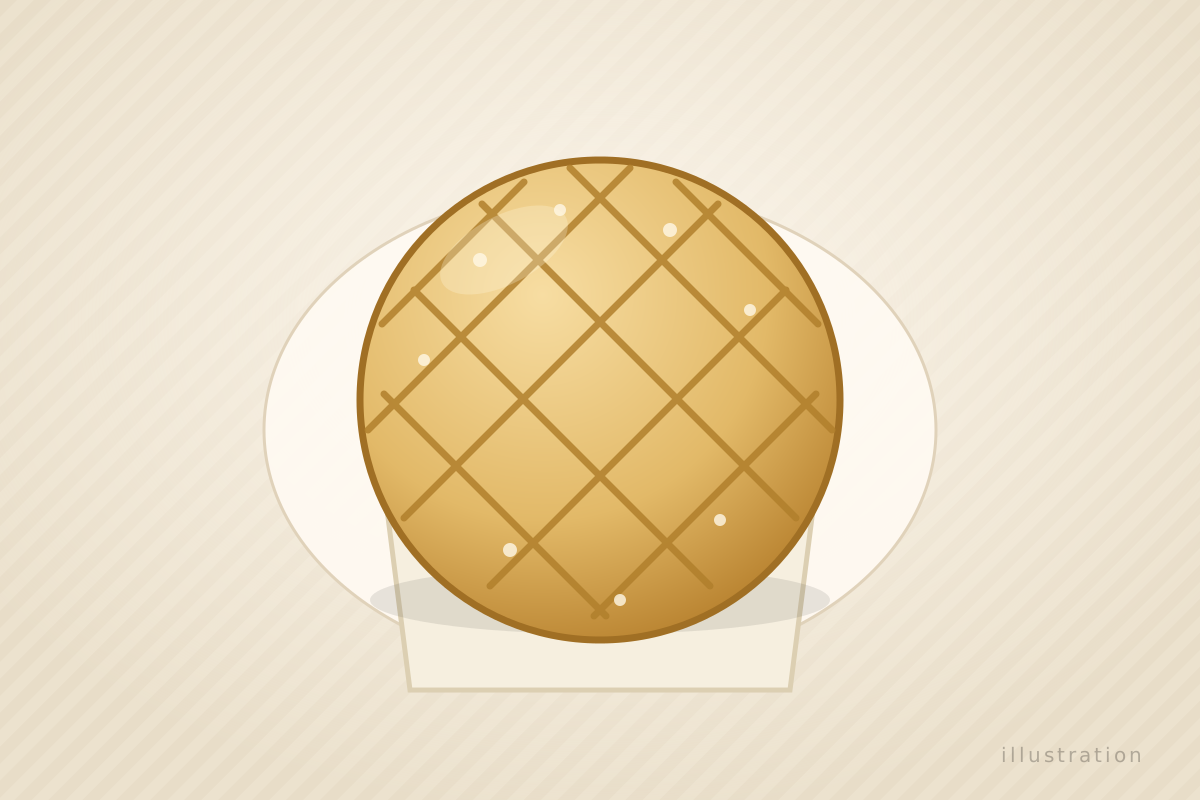 5SweetsAsakusa Kagetsudo×Jumbo Melon PanAs wide as your face, gritty-crisp with sugar outside and startlingly light within. Catch a batch straight from the oven and it is too hot to hold. In summer there is a limited version with ice cream inside. It closes at 5pm, so go early in the afternoon.Nearest 2-7-13 Asakusa (Nishi-Sando)Price ¥ JPY
甘
5SweetsAsakusa Kagetsudo×Jumbo Melon PanAs wide as your face, gritty-crisp with sugar outside and startlingly light within. Catch a batch straight from the oven and it is too hot to hold. In summer there is a limited version with ice cream inside. It closes at 5pm, so go early in the afternoon.Nearest 2-7-13 Asakusa (Nishi-Sando)Price ¥ JPY
甘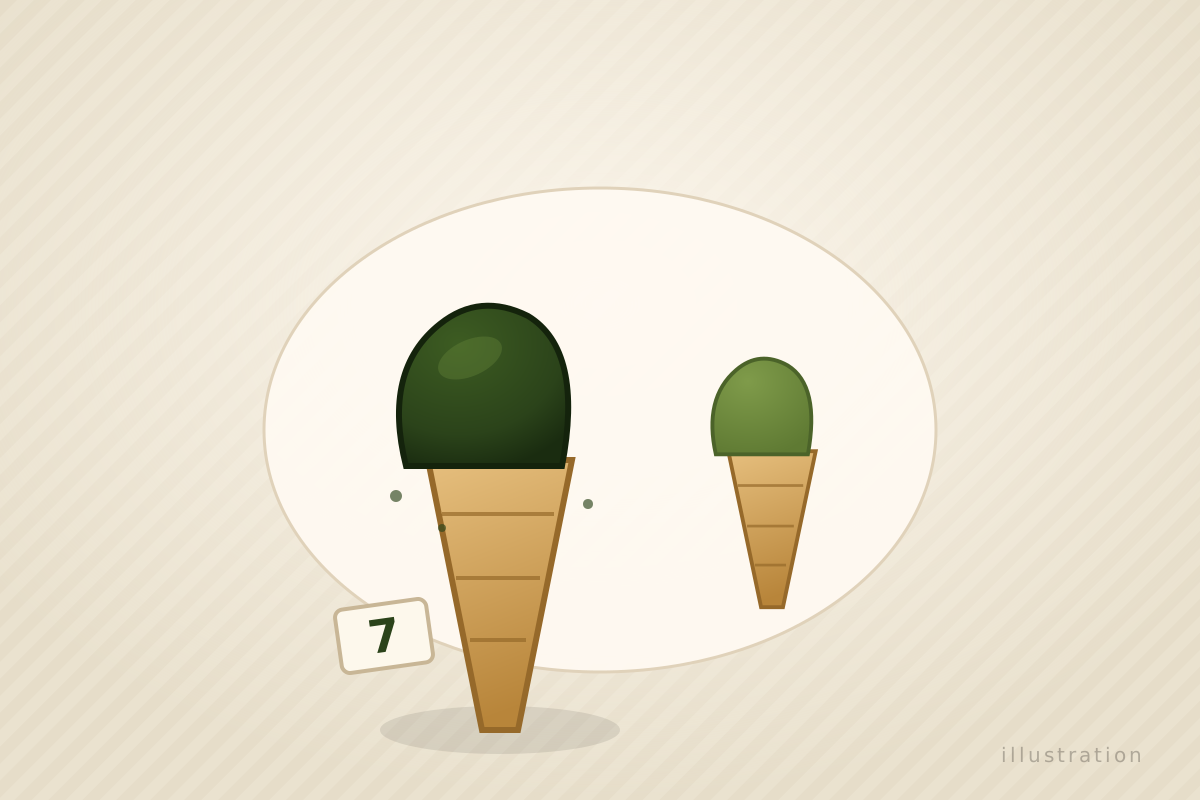 6SweetsSuzukien Asakusa×Matcha Gelato No.7Seven grades of strength, and the No.7 claims to be the strongest matcha gelato in the world. Bitterness arrives before sweetness, and only then does the tea aroma rise. If you cannot decide, order No.7 beside No.5 and the difference becomes obvious. Closes at 5pm.Nearest 3-4-3 AsakusaPrice ¥ JPY
肉
6SweetsSuzukien Asakusa×Matcha Gelato No.7Seven grades of strength, and the No.7 claims to be the strongest matcha gelato in the world. Bitterness arrives before sweetness, and only then does the tea aroma rise. If you cannot decide, order No.7 beside No.5 and the difference becomes obvious. Closes at 5pm.Nearest 3-4-3 AsakusaPrice ¥ JPY
肉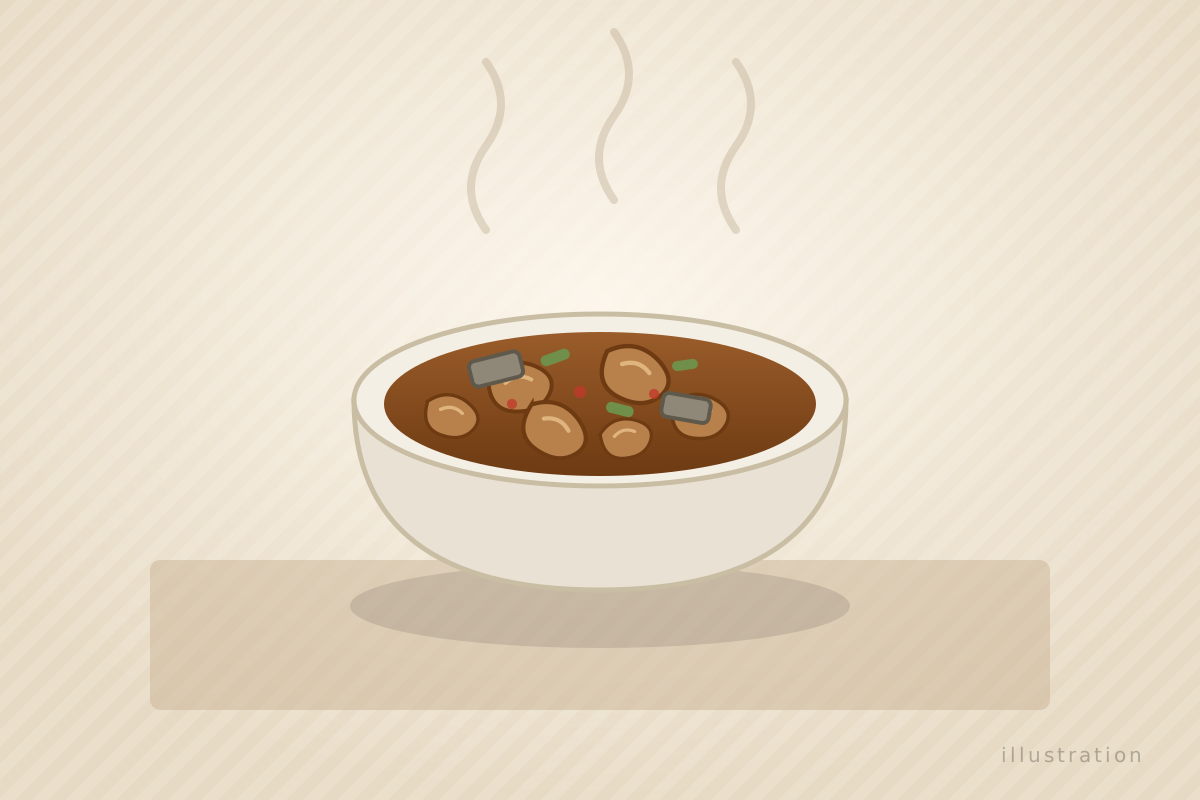 7MeatTotoya (Hoppy Street)×Beef Nikomi (stewed offal)Open from 9:30 in the morning, and the outdoor seats fill before noon. Nikomi here is not fixed to miso or soy — every shop tastes different, and that is the point of this street. Sit down with a drink and the tourist current around the temple suddenly looks like another world.Nearest 2-4-13 Asakusa (Hoppy St)Price ¥ JPY
酒
7MeatTotoya (Hoppy Street)×Beef Nikomi (stewed offal)Open from 9:30 in the morning, and the outdoor seats fill before noon. Nikomi here is not fixed to miso or soy — every shop tastes different, and that is the point of this street. Sit down with a drink and the tourist current around the temple suddenly looks like another world.Nearest 2-4-13 Asakusa (Hoppy St)Price ¥ JPY
酒 8DrinkKamiya Bar×Denki BranThirty percent alcohol. The name dates from the Meiji era, when "electric" was shorthand for anything new, and the jolt on the tongue has not changed since. Custom says to chase it with a draft beer. Buy a ticket at the entrance before taking a seat.Nearest 1-1-1 Asakusa (by Asakusa Stn)Price ¥ JPY